
In the second episode of the fourth season of "All Creatures Great and Small," titled "Carpe Diem," the tranquility of the Dales is disrupted by a series of unexpected events that test the Skeldale House veterinarians' commitment to their practice and to each other. As the episode unfolds, we witness the chaos that ensues when goats escape, the introduction of a new character who shakes up the status quo, and the heartwarming decisions made by James and Helen that signal a new chapter in their lives.
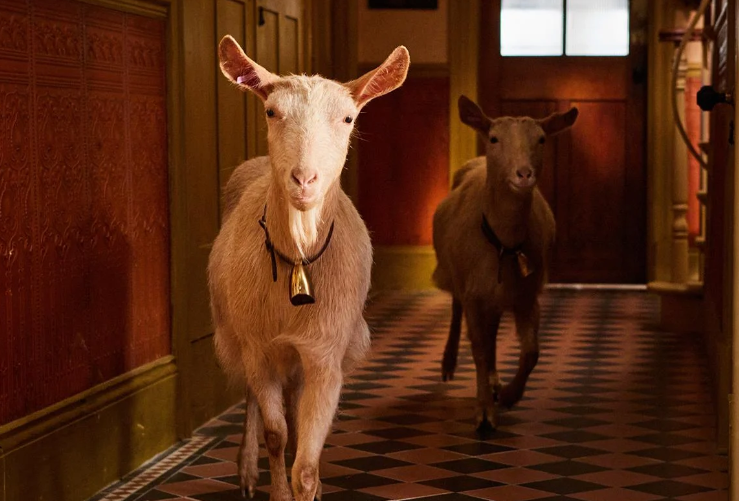
The episode begins with a comedic scene that sets the tone for the chaos to follow. Siegfried, in his quest for a suture kit, inadvertently lets loose two goats in the surgery, causing James to chase after them as they dash through Skeldale House, leaving a trail of destruction in their wake. The goats' antics not only create a humorous disruption but also serve as a metaphor for the unpredictable nature of life and the importance of adaptability.
The arrival of Miss Harbottle, a bookkeeper hired by Siegfried to organize the veterinary practice, introduces a new dynamic to the Skeldale team. Her presence is met with mixed reactions, as her no-nonsense approach to business clashes with the more laid-back, animal-centric ethos of the practice. Miss Harbottle's horror at the state of the books and the practice is palpable, and her immediate actions to impose order and financial discipline create tension among the staff.
Siegfried's decision to hire Miss Harbottle without consulting James highlights the underlying power dynamics and communication issues within the practice. James' frustration is understandable, as he believes that what they need is another veterinarian, not a bookkeeper. However, Siegfried argues that Miss Harbottle's role will free them from paperwork, allowing them to focus on their true passion: veterinary care.
The episode takes a more somber turn when Siegfried visits Dakin's dairy farm to treat Blossom, an aging cow with a torn udder. The repeated injuries to Blossom and her subsequent fate at the slaughterhouse underscore the harsh realities of farming and the veterinarians' role in managing these difficult decisions. Siegfried's suggestion that Blossom could remain on the farm to feed calves is a testament to his compassion and his ability to find humane solutions to challenging situations.
Miss Harbottle's influence on the practice is felt in various ways, from her transformation of the money jug into a cashbox to her insistence on instituting a booking fee. Her actions, while intended to bring financial order, create a rift within the team and with their clients. The conflict between James and Miss Harbottle over Joe Coney's ferret highlights the fundamental differences in their approaches to veterinary care: Miss Harbottle's focus on profit versus James' commitment to the well-being of the animals.
The episode reaches its climax when Siegfried, realizing the error in hiring Miss Harbottle, musters the courage to confront her. His attempt to fire her is met with her resignation, a decision that reflects her own realization that her methods are not compatible with the values of Skeldale House. The resolution of this conflict is a relief, as it allows the practice to return to its core principles.
The episode concludes on a high note with James and Helen's decision to start a family, a poignant moment that signifies hope and the continuation of life amidst the challenges they face. Their choice to "seize the day" is a reminder of the importance of living in the present and embracing the future, despite the uncertainties that come with it.
"Carpe Diem" is a rollercoaster of emotions, from the lighthearted chaos of the escaped goats to the serious discussions about the future of the practice and the lives of the animals in their care. The episode is a testament to the resilience of the Skeldale team and their unwavering dedication to their work and to each other. It is a story of growth, change, and the enduring bond between humans and animals, set against the backdrop of the beautiful Yorkshire Dales.