
In the ever-captivating world of medical dramas, Brilliant Minds carves out its niche with a blend of emotional depth and medical intrigue. Season 1, Episode 3, titled "The Lost Biker," is a testament to the show's ability to tackle profound human conditions with empathy and complexity. This episode, penned by Laura Nowak and aired on October 7, 2024, takes viewers on a rollercoaster ride of emotions, exploring the delicate balance between life, memory, and the human spirit.
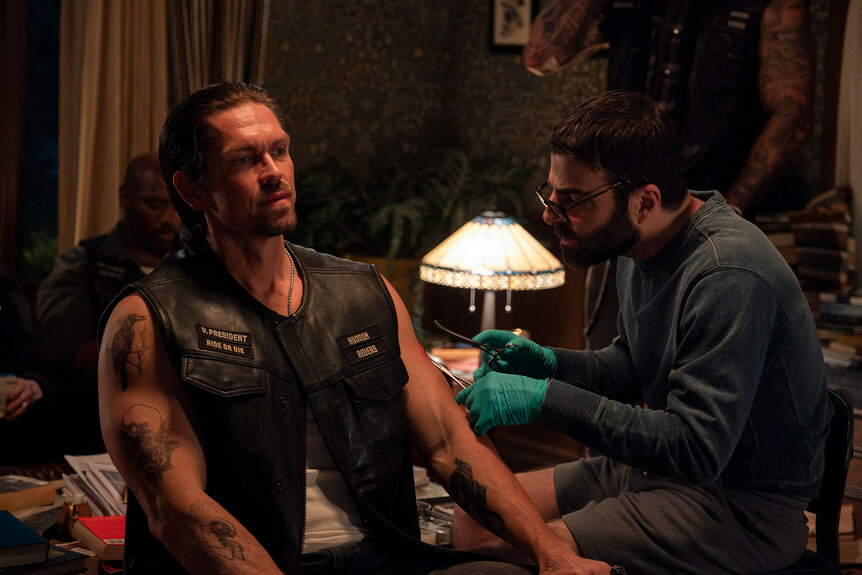
The episode opens with a bang, quite literally, as we are introduced to Wyatt (Steve Howey), a biker and mechanic who is more than just a friend to Dr. Wolf. His character is immediately endearing, bringing a sense of camaraderie and authenticity to the screen. However, beneath the tough exterior lies a man grappling with a deteriorating memory, a symptom of a more sinister underlying condition—a brain tumor.
The narrative takes a poignant turn as Wyatt's condition forces him to confront an impossible choice: undergo surgery that would save his life but rob him of the ability to make new memories, or refuse the surgery and face certain death within months. This moral dilemma is not just a plot device but a mirror to the harsh realities faced by patients and their loved ones every day.
Dr. Wolf, ever the compassionate physician, finds himself at odds with the cold, hard facts of Wyatt's diagnosis. His character is further fleshed out as he grapples with the ethical implications of his friend's condition. The show does an excellent job of humanizing the medical professionals, reminding us that they too are susceptible to the emotional turmoil that comes with their line of work.
In a heart-wrenching scene, Dr. Wolf risks his professional reputation to facilitate a reconciliation between Wyatt and his estranged daughter, Hailey. This act of defiance against the hospital's protocol is a testament to Dr. Wolf's unwavering commitment to his patients' emotional well-being.
Parallel to Wyatt's narrative, we follow the story of Emily, a preteen girl whose laughter-induced heart block poses a unique challenge. The medical team's debate over the best course of treatment—whether to suppress her laughter with beta blockers or find an alternative solution—is a microcosm of the broader medical community's ongoing discourse on quality of life versus longevity.
The episode beautifully captures the innocence and joy of childhood, reminding us of the importance of living life to the fullest. Emily's story is a stark contrast to Wyatt's, yet both narratives converge on the central theme of memory and its role in defining our lives.
As the episode unfolds, we are given glimpses into the personal lives of the doctors, adding layers to their characters. Dr. Carol Pierce's marital issues and her struggle to reconcile her professional and personal life provide a relatable subplot that humanizes her stoic demeanor.
Van, one of the interns, is revealed to have mirror-touch synthesis, a neurological condition that allows him to empathize deeply with his patients. This condition is both a blessing and a curse, offering a unique perspective into the patient-doctor relationship.
The episode concludes with a deeply personal revelation for Dr. Wolf, as he confronts the selective memories he has of his father's illness and death. His mother's admission that she allowed these memories to stand uncorrected adds a layer of complexity to their relationship, hinting at a potential path towards reconciliation.
"The Lost Biker" is a masterclass in storytelling, weaving together multiple narratives that explore the multifaceted nature of memory, the fragility of life, and the moral quandaries that define the medical profession. It is an episode that tugs at the heartstrings while challenging viewers to ponder the value of memory and the essence of what makes life worth living.
In conclusion, Brilliant Minds Season 1 Episode 3 stands out as a compelling piece of television that goes beyond the surface-level drama often associated with medical shows. It delves into the very core of human experience, offering a nuanced portrayal of the doctors and patients at its center. This episode is not just a story; it's a profound exploration of the human condition, and for that, it deserves every bit of the 4.6 out of 5 stars critic's rating it received.