
The fourth episode of Chicago Med's tenth season, titled "Blurred Lines," continues to weave a complex tapestry of medical drama and personal intrigue. This episode serves as a critical juncture in the season-long arc involving Sharon Goodwin, as the threat to her safety becomes increasingly palpable. The broken picture frame in her office is a chilling reminder of the danger she faces, and it's clear that the situation is only going to escalate.
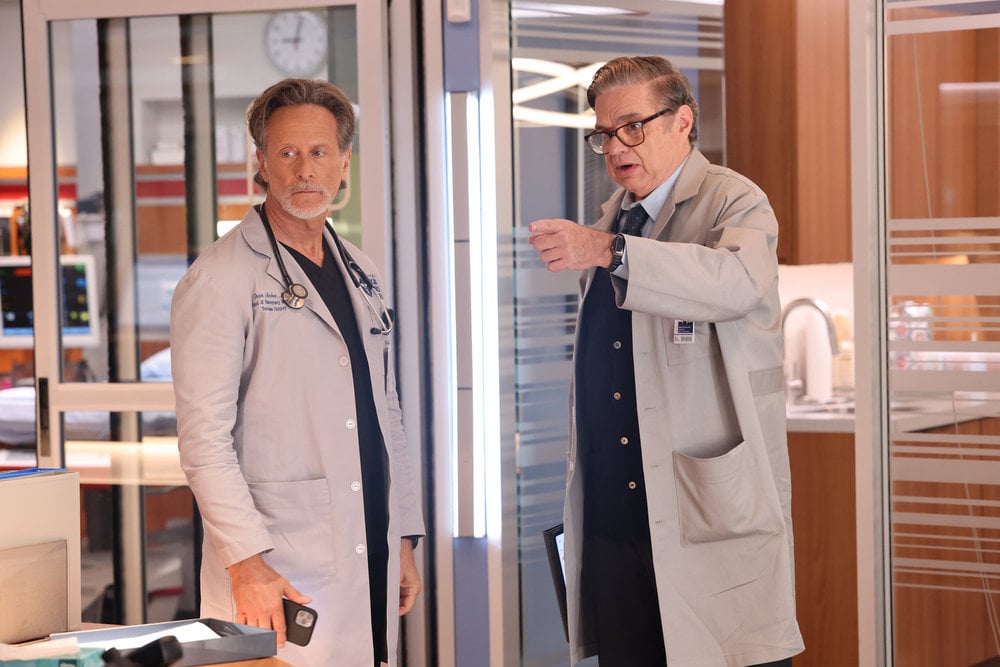
The suspense surrounding Goodwin's safety is masterfully crafted, with the show doling out small doses of tension throughout the episode. This methodical build-up ensures that viewers are kept on the edge of their seats, always wondering who could be behind the threats. The uncertainty is further heightened by the question of whether we can trust Murray's explanation regarding the broken frame. As the show progresses, it's evident that Goodwin's life is far from safe, and the scare tactics are only the beginning.
In terms of character development, "Blurred Lines" delves deep into the psyche of Dr. Hannah Asher, who is grappling with the aftermath of a patient's tragic death from the previous episode. The episode expertly portrays Asher's struggle with trauma, as she battles flashbacks, sleeplessness, and an overwhelming sense of guilt. The fact that her patient's death was not her fault, but rather the result of another doctor's negligence, adds a layer of complexity to her emotional journey. The support she receives from Dr. Caitlin Lenox is a significant moment, as it not only provides Asher with the validation she needs but also humanizes Lenox, who has been a divisive character thus far.
The relationship between Ripley and Asher also takes a significant turn in this episode. Ripley's apology to Asher is a pivotal moment that signifies his growth as a character. His willingness to be there for Asher without overstepping boundaries is a testament to the depth of their connection. The moment when Asher leans on Ripley, both literally and figuratively, is a powerful symbol of their reconciliation and the support they offer each other in the face of adversity.
Maggie Lockwood's behavior towards Jackie, the new ED nurse, is another intriguing aspect of this episode. Maggie's initial wariness and judgmental attitude towards Jackie, who has a history of self-harm, raises questions about her character. However, when Maggie expresses her feelings of responsibility for Jackie to Dr. Charles, her behavior becomes more understandable. Despite this, it's clear that Maggie's approach could have been more empathetic, and her treatment of Jackie as fragile is a missed opportunity for a more nuanced interaction.
Jackie's ability to connect with a patient on a deeper level, drawing from her own experiences, is a compelling plot point. Her presence in the ED has the potential to significantly alter the dynamic, as she brings a unique perspective that could prove invaluable in treating patients with similar struggles.
Overall, "Blurred Lines" is a gripping episode that deftly balances the high-stakes drama of medical emergencies with the personal struggles of its characters. The episode leaves viewers with a lingering sense of unease regarding Goodwin's safety and a deeper investment in the emotional journeys of Asher, Ripley, and Maggie. As the season progresses, the questions raised in this episode are sure to be answered, but for now, they serve to keep viewers captivated and eager for more.