
The fourth episode of Franklin, entitled "Small Revenge," is a rich tapestry of historical drama that weaves personal vendettas with the broader strokes of international politics. The episode opens with a flashback to White Palace in London, where Benjamin Franklin (Michael Douglas) stands before the King's privy council, advocating for the removal of the Royal governor from Massachusetts.
Following a heated exchange with the solicitor general, it's declared that the Royal governor will remain in Massachusetts, and Benjamin's charter as the agent of the colonies of Massachusetts, Pennsylvania, New Jersey, and Georgia is revoked. As Benjamin and Edward Bancroft (Daniel Mays) exit the White Palace, they are met with a barrage of debris thrown by English politicians. In a parting shot, Benjamin declares to Bancroft his intent to make their master a little king, foreshadowing his determination to undermine British authority.
In the present, the news of America's victory at Saratoga reaches Paris, with Beaumarchais (Assaad Bouab) spreading the news written by Benjamin. The Parisians rejoice, and even Vergennes (Thibault de Montalembert) can't help but smile at the turn of events. Anne (Ludivine Sagnier) writes a new song in celebration, while Paul Wentworth (Tom Hughes) and Lord Stormont (John Hollingworth) are visibly upset by the American triumph.
Beaumarchais' joy is cut short when he is struck by a horse and carriage while delivering the news. Injured and with a shard of glass in his arm, he collapses, adding a layer of personal tragedy to the political developments.Benjamin's flirtation with Madame Helvetius (Jeanne Balibar) at Chaumont’s (Olivier Claverie) house and his coded discussion with Anne about their relationship add a layer of personal intrigue. Anne desires a friendship and eternal love with Benjamin, while he maintains his need for time with other ladies. Their conversation is a dance of unspoken desires and social constraints.
Vergennes faces a dilemma as he advises King Louis XVI (Tom Pezier) on whether France should capitalize on England's defeat and support the Americans. Vergennes believes England is seeking an exit from the war to avoid greater losses, and if France acts boldly, they can weaken England. However, Louis is reluctant to pay for a war and remains indecisive.
Through a series of meetings, Benjamin insists that France join with America in a military alliance. Initially, Gerard (Xavier Brossard), Vergennes' associate, suggests that France can only offer friendship and trade, not military assistance. However, after pressure from Benjamin and accusations of Vergennes' unauthorized actions, King Louis ultimately instructs Vergennes to form an alliance with America. The signing of the papers marks a significant moment as America and France become military allies.
Wentworth demands Bancroft to obtain the notes from Benjamin and Gerard's meeting and orchestrates a scheme to have Temple sign a letter expressing loyalty to the British crown, unawares. Bancroft, driven by debt, complies and hands the letter to Wentworth, highlighting the episode's theme of personal ambition overriding national loyalty.
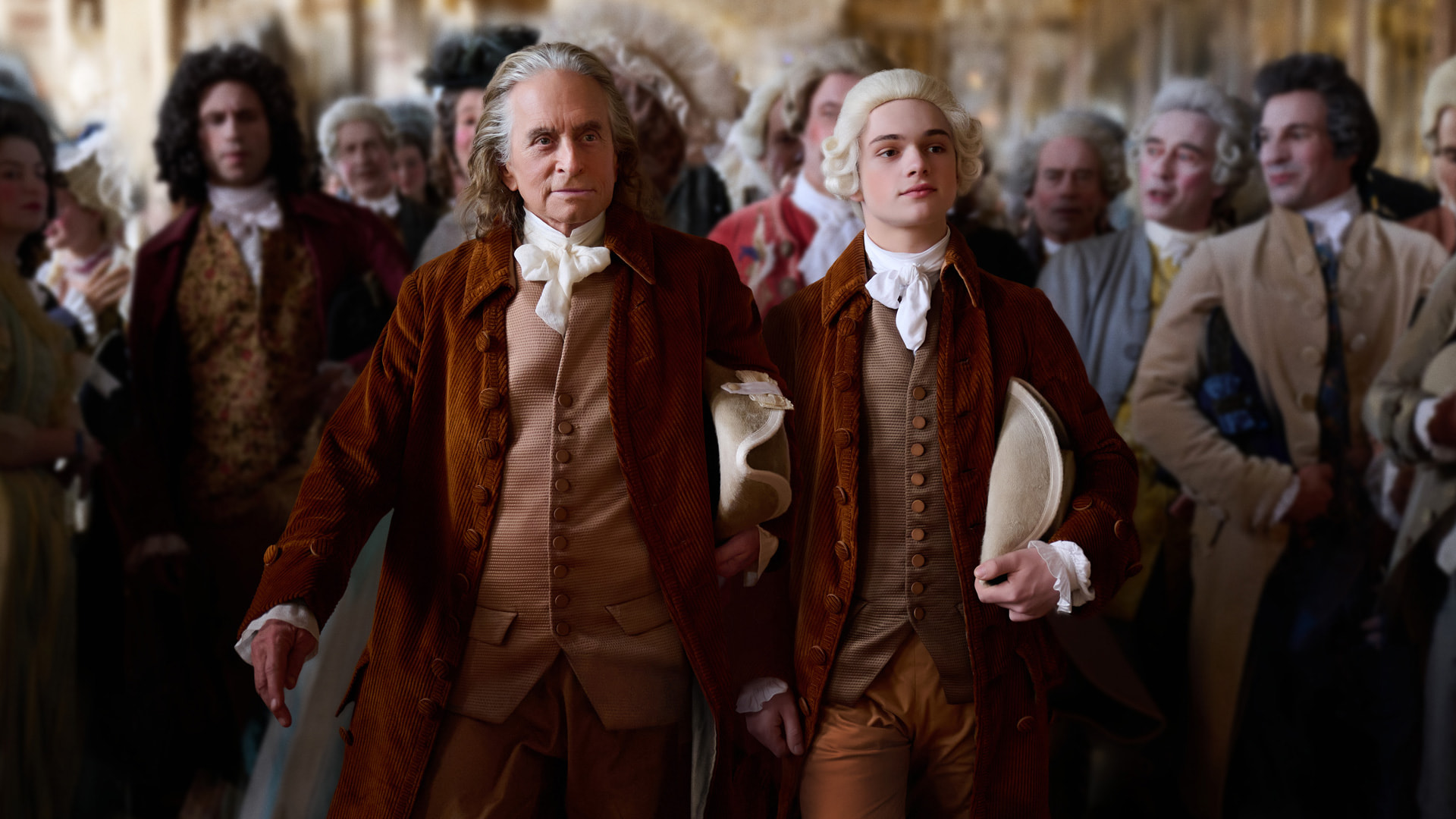
Benjamin is welcomed into Versailles, where he exchanges pleasantries with a recovering Beaumarchais and meets King Louis. Chaumont's celebration of the France-American agreement is attended by a crowd, symbolizing the new alliance's social and political implications. Anne and Benjamin listen to the song she wrote, while Beaumarchais and Helvetius offer speeches that highlight the complexities of their relationships.
The episode concludes with the arrival of John Adams (Eddie Marsan), who has come not to assist but to replace Benjamin. This development suggests a shift in the diplomatic landscape and the personal impact on Benjamin, as his role in France is usurped.
"Small Revenge" is a pivotal episode that captures the essence of Franklin's diplomatic dance, where personal ambitions, national interests, and the complexities of war and politics intersect, setting the stage for the continuing struggle for America's independence.