
As the leaves turn and the air grows crisp, FX on Hulu's new horror series, Grotesquerie, crafted by the chilling minds of Ryan Murphy, Jon Robin Baitz, and Joe Baken, offers a morbid treat for the Halloween season. The first two episodes, which premiered on September 25, set the stage for a murder mystery that delves into the twisted intersections of faith, family, and fear. Episode 2, "True Crime Catholics," not only continues the narrative arc but also expands on the characters' depths, their secrets, and their struggles with the demonic force that seems to be driving the gruesome killings.
The episode kicks off with a flashback into the fractured life of Detective Lois Tryon, painting a picture of a family on the brink. The heated exchange between Lois, her estranged husband Marshall, and their daughter Merritt reveals the broken pieces that Lois is trying to hold together amidst her battle with alcoholism. It's a stark contrast to the stoic, no-nonsense detective we see on the job, and it humanizes her in a way that makes her subsequent actions all the more compelling.
The enigmatic Nurse Redd emerges as a foil to Lois, her interactions laced with venom and a sense of sadistic pleasure. The tension between these two women is palpable, and the audience is left to wonder about the nature of Redd's involvement in Marshall's condition. Is she simply a cruel nurse, or is there something more sinister at play? The confrontation in Marshall's hospital room is a masterclass in building suspense, leaving viewers with a sense of unease that lingers long after the scene has ended.
Lois's home life is further complicated by her relationship with Merritt, who struggles with her own body image and health issues. The scene where Merritt eats a sliced ham under her mother's scrutinizing gaze is a heartbreaking moment that underscores the broken communication between them. Lois's determination to solve the murders is juxtaposed with Merritt's plea for her to retire, highlighting the generational divide and the different ways they cope with trauma.
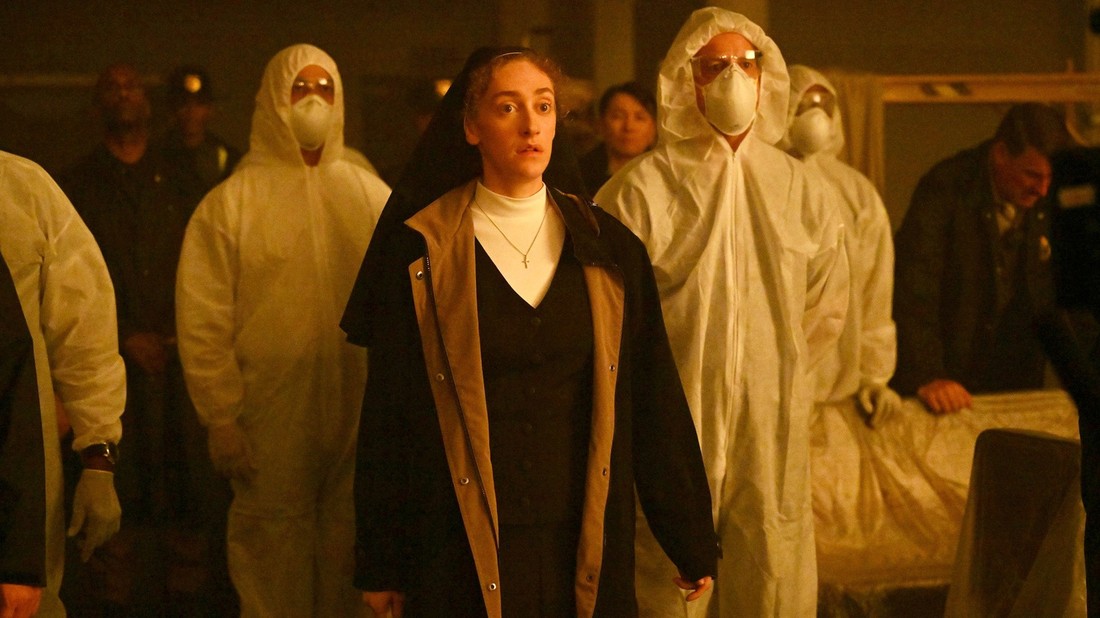
The partnership between Lois and Sister Megan takes center stage as they navigate the dark world of religious fanaticism and ritualistic murder. Sister Megan's board of clues and her gut instinct that the killer is a preacher who sees himself as God add a layer of complexity to the investigation. It's a chilling theory that speaks to the show's exploration of how faith can be twisted and perverted by those who claim to serve it.
Father Charlie's introduction adds another layer to the religious theme of the series. His sermons and his conversation with Sister Megan about true crime and his favorite serial killer, Ed Gein, provide a glimpse into the show's commentary on the morbid fascination with evil. His self-flagellation scene is a stark reminder of the internal struggles that can plague those who are drawn to the darkness.
The revelation that the blood found outside the Burnside house was a red herring planted by the killer is a masterstroke in the series' narrative. It's a twist that keeps the audience guessing and cements the killer's cunning and manipulative nature. The introduction of Sullivan Firkus and the discovery of his body in his mother's basement is a stark reminder of the personal toll this investigation is taking on Lois.
The episode's climax at the church, with the altar arranged to resemble The Last Supper, is a haunting visual that underscores the killer's grandiosity and theatricality. The positioning of the homeless as the victims, all arranged to represent the disciples, is a poignant commentary on the disposable nature of society's most vulnerable. Lois's admission that she's going home to drink in the aftermath of this discovery is a raw and honest moment that speaks to her growing desperation and the weight of the case on her shoulders.
"True Crime Catholics" is a slow burn that simmers with tension and unease. It's an episode that delves deep into the characters' psyches, their motivations, and their flaws. It's a study in contrasts, juxtaposing the sacred with the profane, the holy with the horrifying. As the season progresses, the question remains: will Lois and Sister Megan be able to unravel the mystery before the killer strikes again, or will they become ensnared in the web of evil they're trying to untangle?
The episode leaves viewers with more questions than answers, a testament to the show's ability to craft a narrative that is as intricate as it is chilling. As we await the next installment, one thing is clear: Grotesquerie is a series that is not afraid to look into the abyss, and in doing so, it invites us to gaze along with it.