
In the heart of a bustling city, the neon lights cast a glow over the
streets, reflecting the dreams and despair of its inhabitants. Among them is Bae
Jin-su, a man teetering on the edge of hopelessness. Defrauded by a so-called
friend, he finds himself drowning in debt, his life a series of odd jobs that
lead nowhere. The city that never sleeps offers him no solace, only the cold
embrace of loan sharks and the relentless pressure of an unforgiving world.
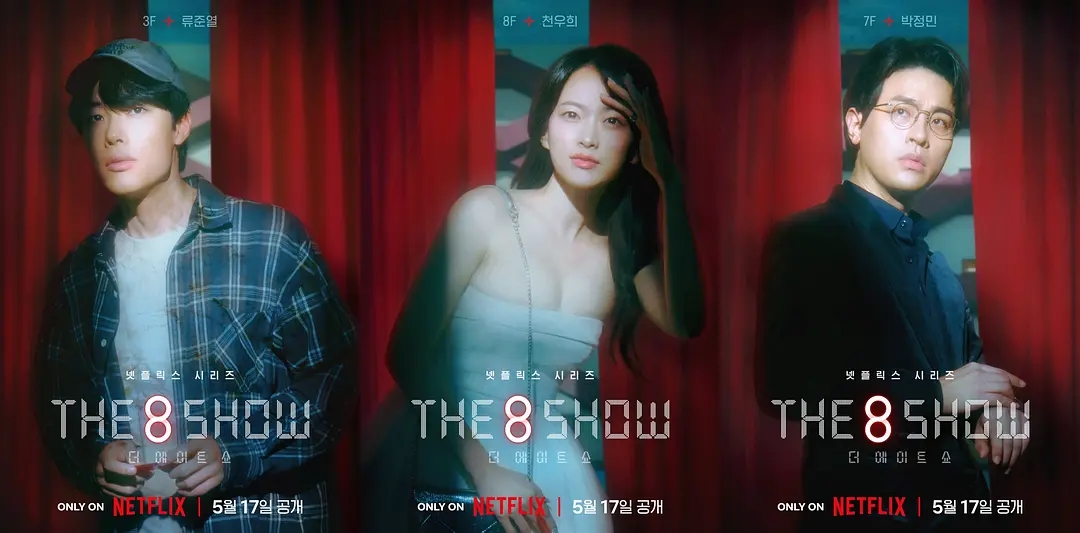
As Jin-su contemplates the abyss from a bridge, a glimmer of hope—or is it a cruel joke?—presents itself. A mysterious deposit and a limousine whisk him away to a theater, a place of illusion and escape. But this is no ordinary theater; it's the gateway to "The 8 Show," a game that promises salvation for those willing to risk everything.
The rules are simple yet enigmatic: participants are paid for their time, no skills required, with food and accommodation provided. The longer they stay, the more money they accumulate. But the game is a fragile construct, ending abruptly with the death of a participant. Each contestant must choose a number as their identifier, and if they choose to walk away, they are offered a modest sum to disappear into the night.
Jin-su, initially skeptical, is drawn in by the allure of easy money. His life, after all, has hit rock bottom. The studio, a monument to modernity with its eight levels, offers a stark contrast to the world outside. As the timer ticks down to midnight, Jin-su and the other participants find themselves in a game that is as much about survival as it is about the accumulation of wealth.
The room on the third floor is a microcosm of the game itself: a scoreboard, an intercom, omnipresent cameras, and a rule book that outlines the path to riches—or so it seems. The uniform is a symbol of conformity, a reminder that they are all pawns in a larger game. The intercom offers a lifeline, a chance to purchase necessities at a price that is a hundredfold more than the outside world.
As the cold night bites and the need for basic comforts becomes apparent, Jin-su realizes the catch. The blanket that promises warmth comes at a staggering cost, a reminder of the harsh reality of the game. Yet, his resilience, honed by a life of poverty, equips him with the ability to make do with the bare minimum.
The morning light brings with it a new set of challenges. The timer has expanded, and with it, the realization that the game is not just about endurance but also about cooperation. The square, a place of commerce within the game, offers a facade of normalcy. The participants, a diverse group of individuals each with their own story, must navigate the complexities of communal living and personal desires.
The food, a symbol of life and sustenance, becomes a point of contention. The disparity between the haves and the have-nots creates tension, a microcosm of societal divides. The solution, a simple yet ingenious idea of distribution through a chute, highlights the power of collective thinking.
As the participants venture to the eighth floor, they are met with a stark revelation. The room is not just larger but a symbol of the hierarchy within the game. The money, it seems, flows upwards, with those at the top reaping the greatest rewards. The timer's relentless march continues, a reminder that time is both their ally and their enemy.
The infinity sign at the end of Episode 1 is a poignant symbol, suggesting that the game of "The 8 Show" is endless, a cycle from which there may be no escape. It is a mirror to the real world, where the struggle for survival is a constant, and the line between reality and illusion is often blurred.