
In "Ruritania," the sixth episode of the final season of "The Crown," the series takes a turn towards the political, pitting Queen Elizabeth II, played by Imelda Staunton, against the charismatic Prime Minister Tony Blair, portrayed by Bertie Carvel. The episode is a tapestry of power dynamics, public perception, and the monarchy's struggle to remain relevant in a modernizing world .
The episode opens with a surreal nightmare that sets the tone for the Queen's existential crisis. Elizabeth dreams of abdicating the throne in favor of Tony Blair, whose popularity is eclipsing her own. This dream sequence is a bold narrative choice, reflecting the Queen's subconscious fears and the challenges she faces in maintaining her relevance .
As the episode unfolds, the Queen's popularity is on the wane, and she finds herself questioning her role in a changing world. The public's perception of the royal family is explored through focus groups, which reveal that they are seen as out of touch and elitist. This leads to a royal audit, with the Queen and her private secretary, Robert Fellowes, interviewing various members of the royal household to assess their value .
The episode also delves into the historical events of the late 1990s, particularly the NATO bombing of Yugoslavia and Tony Blair's efforts to garner support for the invasion of Kosovo. Blair's political maneuvers and his rising popularity, especially in the United States, where he was dubbed "King Tony" by the New York Times, are portrayed with a mix of admiration and skepticism .
The tension between tradition and modernity is a central theme of "Ruritania." Blair's advice to the Queen to modernize the monarchy by purging outdated ceremonial roles is met with resistance. The Queen's interview with the royal household members reveals their dedication and the importance they place in their roles, leading her to defend the value of tradition and the immutable nature of the monarchy .
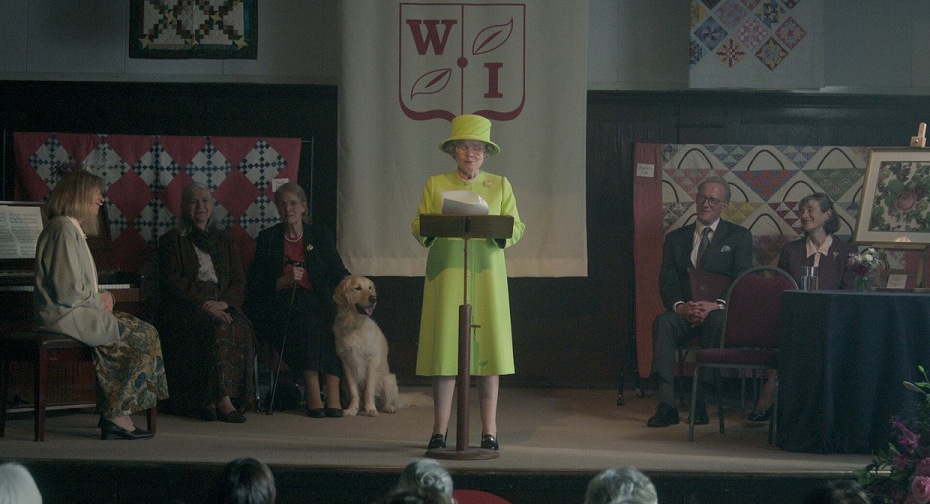
The episode reaches its climax with Blair's speech at the Women's Institute conference, where his call for drastic action and radical changes is met with disdain by the traditional members. This scene is a testament to the Queen's understanding of the British public and their values, as she predicted Blair's misstep .
"Ruritania" concludes with a reaffirmation of the Queen's commitment to her role and the monarchy's enduring legacy. Despite the challenges posed by Blair's popularity and the public's call for modernization, Elizabeth remains steadfast in her belief in the monarchy's importance and her own ability to navigate the complexities of her position .
Throughout the episode, Staunton's portrayal of the Queen is nuanced and powerful, capturing the essence of a woman who is both a symbol of tradition and a leader in a rapidly changing world. Carvel's Blair is equally compelling, presenting a charismatic yet calculating politician navigating the delicate balance of power with the monarchy .
In conclusion, "Ruritania" is a complex and engaging episode that delves into the heart of the monarchy's role in a modern society. It is a story of power, perception, and the unyielding spirit of a Queen who, despite the challenges, remains a steadfast figurehead for her nation .