
In "The Irrational Season 2, Episode 6: The Wrong Side of Maybe," the show takes a bold and unexpected turn, steering clear of its usual murder mystery tropes and diving headfirst into a high-stakes, data-driven race against time. This episode is not just a narrative shift; it's a testament to the show's versatility and its ability to tackle complex issues through the lens of suspense and intrigue.
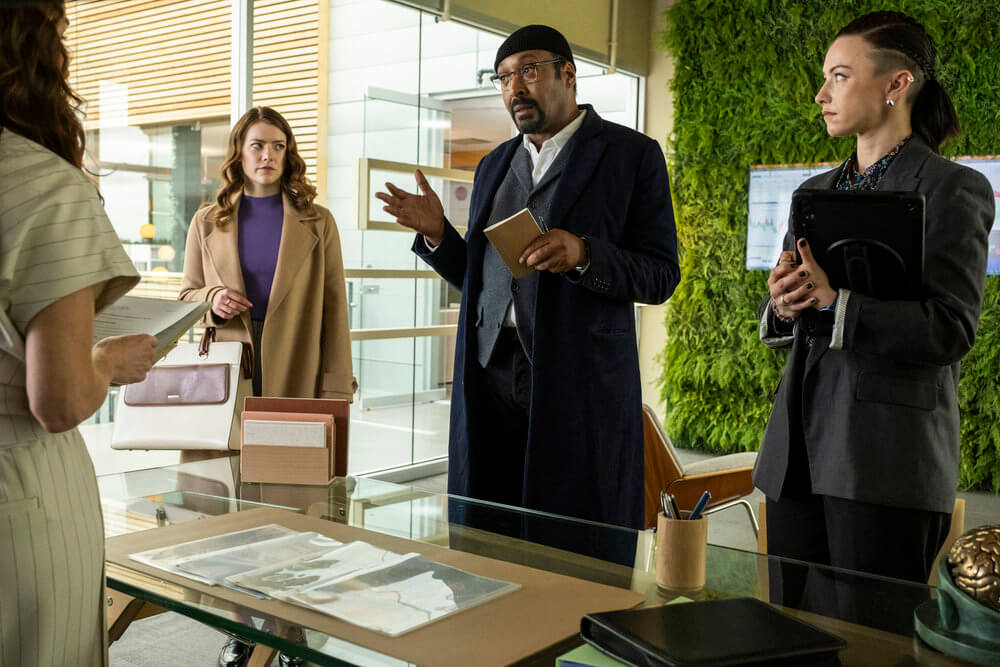
The episode kicks off with a unique premise: instead of the usual whodunit, we find Alec collaborating with a data expert to avert a potential train disaster. This scenario is reminiscent of classic math problems involving the convergence of two trains from opposite directions, adding a mathematical twist to the FBI case. The urgency is palpable as Alec and his new ally, a woman who likens data prediction to time travel, scramble to prevent a catastrophe based on her projections.
As the plot unfolds, the involvement of Marisa and Kylie feels almost incidental, with the story primarily revolving around Alec's partnership with the data expert. The FBI's involvement is triggered by a cybercrime—hacking into a safety system designed to halt trains automatically in the presence of track hazards. This subplot, while a stretch, serves to bring Alec and Kylie together in a common goal, underscoring the importance of their teamwork over the plausibility of the FBI's involvement.
Before the FBI's involvement, the episode focuses on a quirky forecasting company that Alec is keen to investigate. The company's modus operandi is to harness data for eerily accurate future predictions, a concept that echoes the sci-fi theme of time travel and the perils of altering the timeline. The company's head, Willa, warns against intervening in predicted disasters, fearing the ripple effects of changing the timeline. This narrative strand explores the idea that predictions, no matter how data-driven, are tools and not destiny.
The episode's central theme resonates with the current zeitgeist, offering a message of hope in a time of uncertainty. Alec and Laura's dialogue captures this sentiment, with Alec asserting that the future is not written in stone, emphasizing the power of collective resilience in the face of adversity. This message is a beacon of light in an episode that deals with heavy themes, reminding viewers that while predictions can be dire, they are not inevitable.
The episode also delves into Alec's trauma response, showcasing his willingness to take extreme risks as a coping mechanism. His near-death experience has led him to embrace life fully, becoming increasingly comfortable with danger. This perspective is both exhilarating and cautionary, advocating for living life to the fullest while warning against the reckless pursuit of thrills.
Running parallel to the main storyline is Phoebe's subplot, which adds a layer of relatability and depth. Phoebe's return to the research team after an absence is fraught with uncertainty and tension. Her colleagues have evolved in her absence, and the team dynamics have shifted, presenting a fresh challenge as they navigate their new normal. Phoebe's suggestion to experiment with their working relationship is a pragmatic approach to overcoming these obstacles.
"The Irrational Season 2, Episode 6: The Wrong Side of Maybe" is a standout episode that deviates from the series' usual fare, offering a fresh perspective on data, predictions, and the human spirit. It's a thrilling ride that keeps viewers on the edge of their seats while delivering a poignant message about the power of hope and the resilience of the human spirit. This episode is not just television; it's a reminder that in the face of uncertainty, we have the power to shape our own futures.