
In the shadow of Amsterdam's picturesque canals and historic streets, a sinister plot unfurls in the first episode of Van der Valk's second season, "Plague on Amsterdam." The city, known for its rich history and vibrant culture, becomes a stage for a macabre dance of death and deception, as the series' eponymous detective and his team are drawn into a case that tests their wits and their resolve.
The episode opens with a chilling discovery: a scarecrow, fashioned not from straw but from the lifeless body of a woman, lawyer Susie de Windt. The grim tableau is a harbinger of the horrors to come, as an "X" carved into her stomach suggests a cryptic message or a signature of the killer. The scene is both stark and evocative, setting the tone for an investigation that will lead the team through the city's underbelly and into its historical heart.
As the team delves into Susie's life, they uncover a web of professional and personal connections that hint at a motive for her murder. Her husband, Roland, a lawyer and historian, is a man of contradictions, seemingly indifferent to his wife's absence yet deeply entwined in the legal battles that define their lives. The land where Susie's body was found is central to a contentious dispute between the city and a community of squatters, a conflict in which Susie played a pivotal role.
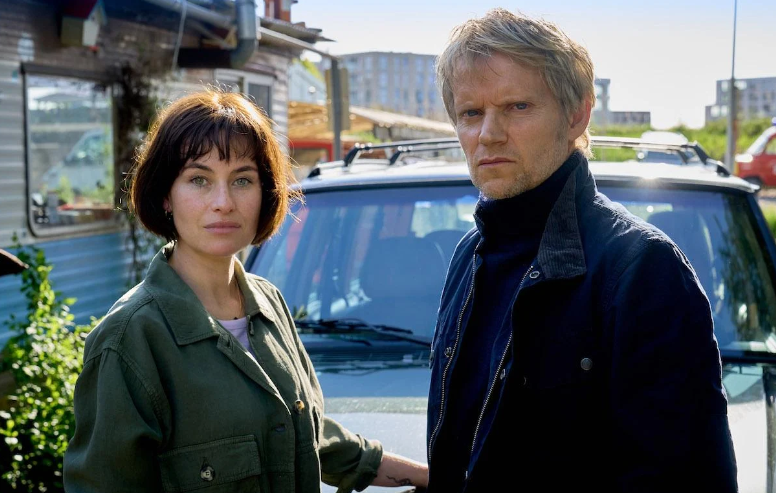
The detectives' pursuit of the truth leads them to the polder community, a haven for artists and outcasts, and to Cassie Davids, their enigmatic lawyer. Her portrayal of the community's plight and the impending development that threatens their home adds a layer of social commentary to the episode, reflecting the ongoing tensions between progress and preservation, gentrification and community.
The discovery of a second body, Juliana Holt, drowned and marked with two Xs, confirms the detectives' fears of a serial killer at work. The victims, seemingly unrelated, are linked by the cryptic notes left at the crime scenes, each referencing the philosopher Baruch Spinoza and his work, Ethics. The detectives must navigate a labyrinth of philosophical allusions and historical references, a testament to the killer's twisted intellect.
As the investigation progresses, the team is confronted with a series of clues that seem to point to a larger conspiracy. The Xs carved into the victims' bodies echo the trials of Amsterdam, and the notes' references to Spinoza's exile and betrayal hint at a motive rooted in the city's past. The detectives must untangle a complex narrative that weaves together the personal, the political, and the philosophical.
The episode reaches a climax with the murder of Ruud Lipman, the head of the consortium set to develop the polder, his body bearing the mark of the third X. The detectives' race against time to prevent the "one last big bang" promised in the final note leads them to Tonie Alderlink, a man driven by a sense of injustice and a desire for revenge. His plan to destroy the pier and himself in a fiery explosion is a tragic manifestation of the city's trials, a final act of defiance against the forces that threaten his community.
The resolution of the case is both triumphant and poignant, as the team's tireless efforts avert disaster and bring the killer to justice. Yet the episode ends on a note of personal reflection for Van der Valk, as his relationships and his role in the city's life come into focus. His connection to Lena, and the revelation of his true profession, add a layer of intimacy to the story, reminding viewers of the human cost of the cases they solve.
"Plague on Amsterdam" is a gripping start to the second season of Van der Valk, offering a compelling narrative that delves into the city's history and its present struggles. The episode is a masterclass in storytelling, blending elements of crime drama with philosophical intrigue and social commentary. The detectives' journey through Amsterdam's darkened soul is both harrowing and illuminating, a testament to the series' ability to explore the complexities of human nature and the city that shapes it.