
The second episode of Wolf Hall's second season, titled "Obedience," is a masterful continuation of Hilary Mantel's intricate narrative, deftly weaving the complexities of power, loyalty, and personal anguish within the Tudor court. Mark Rylance's portrayal of Thomas Cromwell is nothing short of mesmerizing, as he navigates the treacherous waters of Henry VIII's favor and the political machinations of the time.
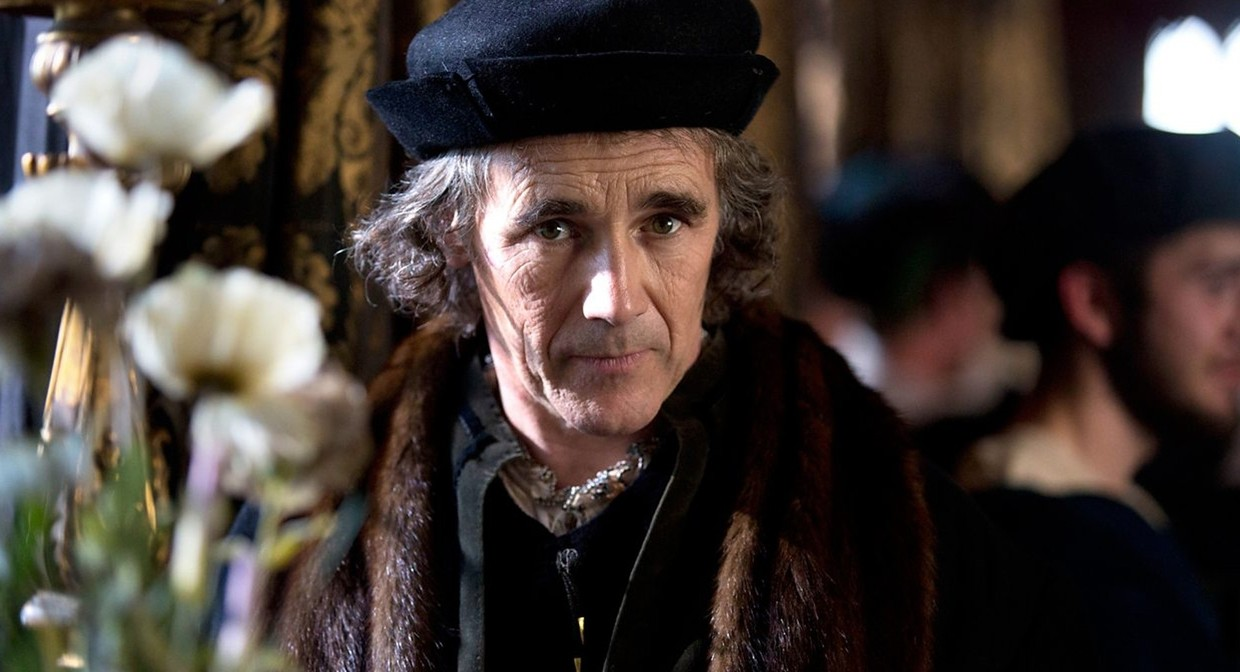
The episode opens with a haunting replay of Cardinal Wolsey's downfall, setting a somber tone for the narrative that unfolds. This retrospective is not merely a device to refresh the audience's memory but a microcosm of the fate that potentially awaits Cromwell. The parallels between Wolsey and Cromwell are striking—both men rose from humble beginnings to wield significant influence, only to face the wrath of a capricious king.
Cromwell's vulnerability is laid bare in his encounter with Dorothea, a scene that contrasts sharply with his usual stoicism. His grief over her belief that he betrayed her father, Cardinal Wolsey, is palpable. Rylance's performance captures the essence of a man who has always been the master of his emotions, now undone by the words of a woman who refuses to see past her own pain. This scene is a testament to Mantel's ability to humanize historical figures, transforming Cromwell from a one-dimensional villain into a man of depth and complexity.
The episode delves into Cromwell's relationship with Wolsey, a figure who looms large in his psyche. Their imagined conversations are a rare glimpse into Cromwell's unguarded moments, where he is free to express his love and loyalty for the man who was his mentor. The pain of believing that Wolsey suspected him of betrayal is almost too much for Cromwell to bear, highlighting the emotional stakes in his political games.
The intrigue surrounding the Duke of Norfolk adds another layer to the episode. His absence is felt keenly, as his influence permeates the actions of others. The interrogation of Thomas Howard is a particular highlight, with Cromwell's wit and intelligence on full display. The question of who planted the idea of marrying the king's niece and aspiring to the throne is a rhetorical one, with Norfolk's hand evident in the plot.
Norfolk's machinations also extend to the rumor that Henry intends to marry Cromwell to his daughter, Mary. This fabrication is a calculated move to incite the king's wrath, playing on the prejudices of the nobility against Cromwell's low birth. Yet, Cromwell's actions with regard to Mary are enigmatic. The gift of a ring and his contemplation of her desire for a child suggest a man who might be pushing the boundaries of his influence.
The episode is a study in contrasts, with Cromwell's strategic acumen juxtaposed against Henry's increasingly erratic behavior. The Turkish disguise scene is a comedic interlude that underscores the king's buffoonery, a stark contrast to Cromwell's calculated moves. Both men are tainted by the blood on their hands, but it is Cromwell who earns the audience's sympathy in this adaptation by Peter Straughan and Peter Kosminsky.
Cromwell's legacy and his vision for the future of the Church of England are also explored. His passionate speech to his son, Gregory, reveals a man driven by more than personal ambition. He is looking ahead to a time when he will no longer be present, teaching the next generation how to navigate the world he has helped to shape.
"Obedience" is a powerful episode that delves into the psyche of Thomas Cromwell, a man caught between his own desires and the demands of a brutal regime. It is a testament to Mantel's skill as a writer and Rylance's as an actor that they can bring such a rich and nuanced portrayal to the screen, making the audience question the nature of power, loyalty, and the human cost of ambition. As the episode concludes, we are left to ponder Cromwell's fate and the legacy he will leave behind, a legacy that is as much a product of his own making as it is of the historical forces that surround him.