
The first episode of Hulu's "Interior Chinatown" titled "Generic Asian Man" sets the stage for a compelling exploration of identity, ambition, and the complexities of life within a community often misunderstood by the outside world. The series, based on Charles Yu's novel, delves into the life of Willis Wu, a character trapped in the stereotypes and expectations that define his existence in the eponymous Chinatown.
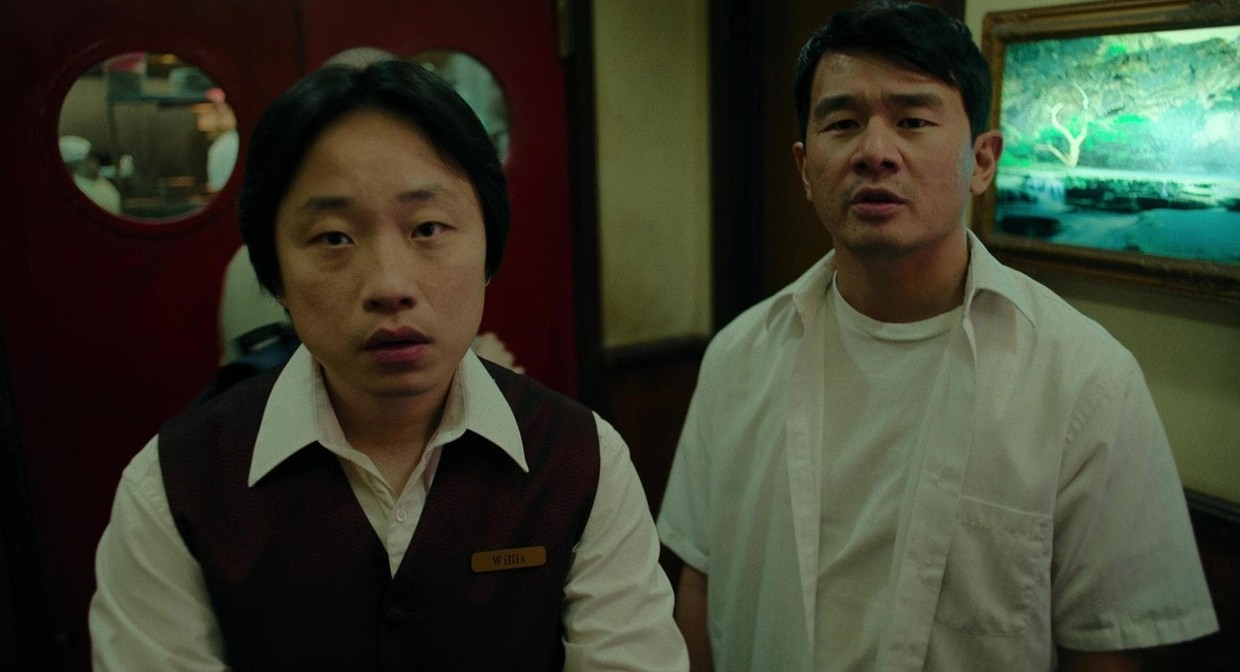
The episode opens with a sense of monotony, as Willis, played by Jimmy O. Yang, works as a waiter in Uncle Wong's restaurant. His complaints to his friend Fatty about the lack of excitement in their lives are a stark contrast to the action-packed world of the police procedural show within the show, "Black and White." Willis dreams of escaping his generic role to become a detective like Officers Green and Turner, who are frequently in the spotlight for their crime-solving prowess.
This dream is interrupted by a jarring event: Willis witnesses the abduction of a woman across the street. This incident serves as a catalyst for the rest of the episode, as Willis becomes entangled in a mystery that threatens to upend his mundane existence.
As Willis continues his routine at the restaurant, the show introduces a new character, Detective Lana Lee, portrayed as a Chinatown expert brought in to assist with an investigation into the assumed gang wars connected to the abduction. Her introduction adds a layer of complexity to the narrative, as she seeks Willis's help in obtaining fingerprints from a seller involved in an organized syndicate operating within the restaurant.
The arrival of Detectives Green and Turner at the restaurant adds a layer of tension, as they reveal that the buyer in question is an undercover police officer who has planted a tracker in the buyer's briefcase. This twist pulls Willis deeper into the world of crime and intrigue, a world far removed from his role as a background character in "Black and White."
The episode takes a dramatic turn when a gang war erupts inside the Golden Palace restaurant. Willis, eager to prove himself, joins the fight, only to be knocked out and reminded by his father, Joe, that his role is not to win but to make the other guy look good. This moment is a poignant reminder of the limitations placed on Willis by his community and the broader society.
The following morning, the restaurant is repaired, and life seems to return to normal, despite the news reports announcing the abducted woman's death. Lana contacts Willis, revealing that she is investigating his brother's disappearance and its connection to a gang called the Painted Faces. This revelation adds a personal dimension to Willis's involvement in the case, as he learns that his brother was part of a special task force that was dissolved after he went missing.
The episode concludes with Willis confiding in Fatty about his decision to seize this opportunity to break free from his generic role. However, his resolve is shaken when he sees the dead woman outside the restaurant, a haunting reminder of the real-world consequences of the drama unfolding around him. The episode ends on a meta note, as Willis notices the camera and steps out of the restaurant, a moment that breaks the fourth wall and invites the audience to reflect on the nature of representation and the constructed nature of the world Willis inhabits.
"Generic Asian Man" is a powerful start to "Interior Chinatown," offering a nuanced look at the Asian-American experience and the struggle for identity within a community often reduced to stereotypes. The episode skillfully blends elements of crime drama, family drama, and meta-commentary on the nature of storytelling, setting the stage for a series that promises to be both thought-provoking and entertaining.