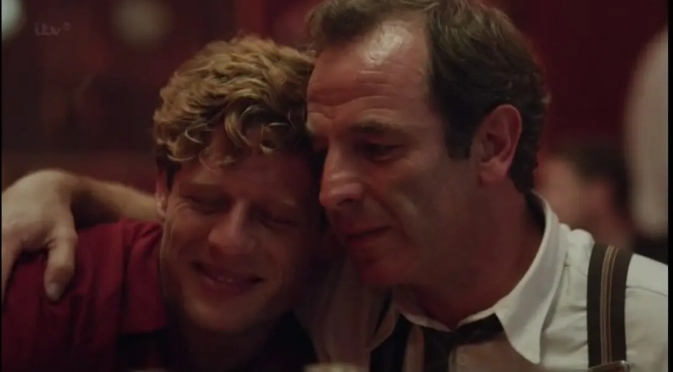
Episode 1: A Suicide Mystery in Grantchester
In 1954, Grantchester, Cambridgeshire, the morning mist always clung to the stone cottages and wheat fields like a thin veil. As soon as the bells of St. Andrew's Church fell silent, Reverend Sidney Chambers knelt in the churchyard, pouring canned food for three stray cats—he bought the cans with his own stipend, and the tins still bore the label "military surplus." The villagers all loved this thirty-year-old reverend: he helped elderly loners repair leaky roofs, quoted W.B. Yeats in his sermons from time to time, and only rubbed his left leg gently on rainy days, where a shrapnel scar from his days as a WWII paratrooper lay hidden.
Peace was shattered by the death of blacksmith Jack Coleman. Early that morning, Jack’s wife found him slumped over his desk in the study, a revolver clutched in his right hand, blood oozing from a wound in his temple, and a suicide note reading "unable to repay debts" laid out beside him. Detective Geordie Keen, newly transferred from London, glanced at the scene and frowned, dismissing it as "suicide"—he had seen enough violent crimes in the city to think rural offenses were always about money or love. But Sidney couldn’t let it go: just the day before, he had run into Jack outside the church, who had held his daughter’s sixth birthday photo and smiled, saying, "I’ll take her to Cambridge Zoo next week." How could someone like that suddenly abandon his child?
Sidney found Geordie, his tone soft yet firm: "Jack had rheumatism in his left hand—he could barely sign his name neatly, but the suicide note is perfectly written. And the whiskey on his desk was full, not a sip taken—who pours a drink for themselves before committing suicide?" Geordie waved him off impatiently, but when he saw the photo of Jack’s daughter, he finally relented. The two returned to Jack’s house, where Sidney found a photo of a woman tucked in the desk’s hidden compartment, with "Meet at the Old Mill next Wednesday" written on the back. In the fireplace ashes, he used tweezers to pull out a half-burned bill, printed with "Cambridge Jewellers, pearl necklace, £50 owed." Even the sole of Jack’s shoe was stained with the gray-black soil unique to the church cemetery—he had come to the church before his death, yet never said a word to Sidney.
The clues led to Grace, Jack’s colleague—they had been secretly seeing each other for six months, and the necklace was a gift from Jack. Grace’s husband Arthur was furious and desperate when he found out: afraid of losing his wife and unable to pay back the money Jack owed him, he had confronted Jack at home, killed him, forged the suicide note by imitating Jack’s handwriting, and stuffed the revolver into Jack’s hand to stage a suicide. That evening, as the case closed, Geordie sat on the church steps and handed Sidney a pint of bitter beer: "You’re a reverend, but you understand people’s hearts better than us cops who rely on evidence." Sidney looked at the lit window of Jack’s house: "I just didn’t want him remembered as a ‘suicidal debtor.’ He was a father trying to surprise his daughter."
That night, Sidney received a letter from London, sent by his WWII comrade Harry. It contained only one line: "Do you remember what happened in Amsterdam?" He stared at the letter for a long time before tucking it deep into his drawer.

Episode 2: Poison in a Market Teacup
Grantchester’s autumn market always smelled of fresh bread and cider. Sidney was helping the elderly Mrs. Martha pick potatoes when a shrill scream suddenly cut through the air: "Mary! Mary, wake up!" The crowd parted, and Mary Corbett, the cake seller, lay collapsed behind her stall, a half-empty cup of tea in her hand. Her face was as pale green as frostbitten leaves, and foam clung to the corner of her mouth.
When Geordie arrived, the coroner had already identified the cause: poisoning by arsenic, with traces of the powder still left in the teacup. Mary’s husband Tom knelt on the ground, crying: "She must have mistaken insecticide for sugar." But their sixteen-year-old daughter Beth lingered nearby, her fingers digging into an unsold slice of Victoria sponge cake, her eyes darting away, too afraid to look at her mother’s body. Sidney noticed this detail, and later, in the church confessional, Beth finally broke down in tears: "Last night, I saw Dad pour white powder into Mom’s tea caddy. He said it was sleeping medicine, but I didn’t dare ask more…"
Geordie soon found a bottle of arsenic labeled "insecticide" in Tom’s tool shed, but Tom protested his innocence: "I only wanted to add a sleeping pill to Mary’s tea—she’s been arguing with me about divorce lately." Sidney didn’t believe him. Remembering Mary visited Cambridge Library every Wednesday, he made a special trip there. The librarian said Mary had recently borrowed books like Arsenic Poisoning Identification and Family Law, with notes scrawled in the margins: a string of numbers, which turned out to be Tom’s check stubs—every 15th of the month, £10 was sent to someone named "Lilian."
Following the name, Sidney found "Lilian’s Thimble Tailor Shop" on an old street in Cambridge. After a long hesitation, Lilian admitted she had been having an affair with Tom for two years: "Mary found me last week, holding the check stubs. She said she’d divorce Tom and kick him out with nothing—not even the farm." It was only then that Tom crumbled, sobbing in the police station: "The farm was left to me by my parents, and Beth is still in school. I couldn’t lose everything… I only wanted to scare her, not kill her."
After learning the truth, Beth hid in the church bell tower. Sidney climbed up and sat with her for a long time. "I should have stopped Dad," she whispered, her voice carried away by the wind. Sidney gently rested her head on his shoulder: "Your mom wouldn’t want you to live with guilt. From now on, if you see something wrong, just speak up bravely." From that day on, whenever Geordie had a case, his first thought was, "I need to talk to Sidney."
No one noticed, though, in the background of a photo of Tom and Lilian in the case file, there was a blurry figure in a WWII military coat—someone who looked just like Sidney’s comrade Harry.
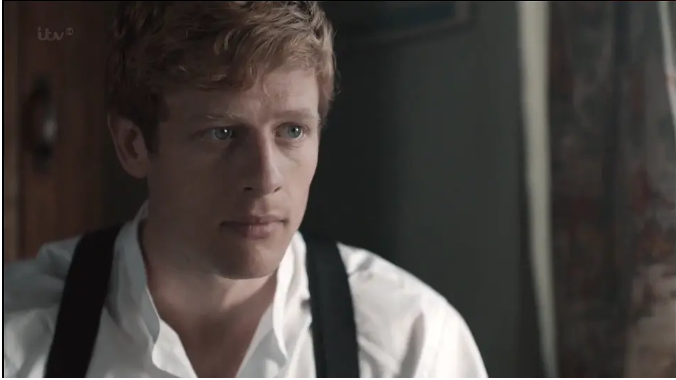
Episode 3: A Shot in the Veterans' Club
The veterans’ club always reeked of tobacco and beer. Men huddled around the pool table, humming old WWII songs. Sidney had come to visit Billy—his comrade from the D-Day landings. Billy had lost his right leg to a mortar shell and now walked with a cane, his trouser leg hanging empty. But as soon as Sidney pushed open the door, chaos erupted by the pool table: Billy lay on the green felt, a bullet wound in his chest, his brass veteran’s badge stained red with blood, and his own revolver lying beside him.
"He wouldn’t have killed himself!" Ted, an elderly veteran, grabbed Sidney’s arm, shouting. "Yesterday, he was bragging about his grandson coming to visit next week with a new toy train!" Someone else added: half an hour before the incident, a man in a black coat and top hat had come to see Billy. They argued fiercely in the corner—the man had said, "You owe me the promise we made back then," while Billy had yelled, "I won’t help you do dirty work anymore."
After examining the body, the coroner said the angle of the bullet wound was wrong for suicide; it looked more like someone had shot Billy from the side, then stuffed the gun into his hand. Sidney suddenly remembered: when Billy had come to confess the week before, he had vaguely mentioned "a mistake I made during the war—now someone’s using it to threaten me." He pulled out Billy’s war diary, which he had left at the church. The leather cover was worn, and one page had been torn out, leaving only faint words: "Amsterdam, diamonds, Major Miller." Sidney’s heart sank—back in Amsterdam during the war, he and Billy had indeed served under Major Miller, who was in charge of a batch of "military diamonds." Later, the diamonds vanished, and Miller disappeared without a trace.
Geordie discovered that Billy had been receiving an anonymous £20 transfer every month, from a shell company in London. Sidney followed the lead to Miller—now going by "John Smith," he ran a WWII memorabilia antique shop in Soho. When the police raided the shop, they found the diamonds in an old wooden crate in the basement. Miller sneered and confessed: "I asked Billy to help me sell the diamonds, but he wanted to turn himself in and expose me… I had no choice but to kill him." He added that during the diamond heist, they had accidentally killed a Dutch baker: "Billy’s been secretly sending money to the baker’s family all these years, calling himself a sinner every day."
After the case closed, Sidney laid a bunch of sunflowers on Billy’s grave—Billy had once said they looked like "sunshine on the battlefield." Geordie stood beside him: "He wasn’t a sinner. He was just a man broken by the war." Not long after, though, Sidney received a letter from prison, written by Miller: "What happened in Amsterdam isn’t over. That major is still out there." Sidney tucked the letter into his Bible, his fingertips brushing the shrapnel scar on his leg—some secrets, after all, could never stay hidden.