
In the fourth episode of Black Mirror's sixth season, "Mazey Day," the series takes a bite out of the celebrity culture and the relentless pursuit of the paparazzi. Clocking in at a brisk 42 minutes, this episode offers a compact narrative that packs a punch with its unexpected twists and a dash of supernatural horror.
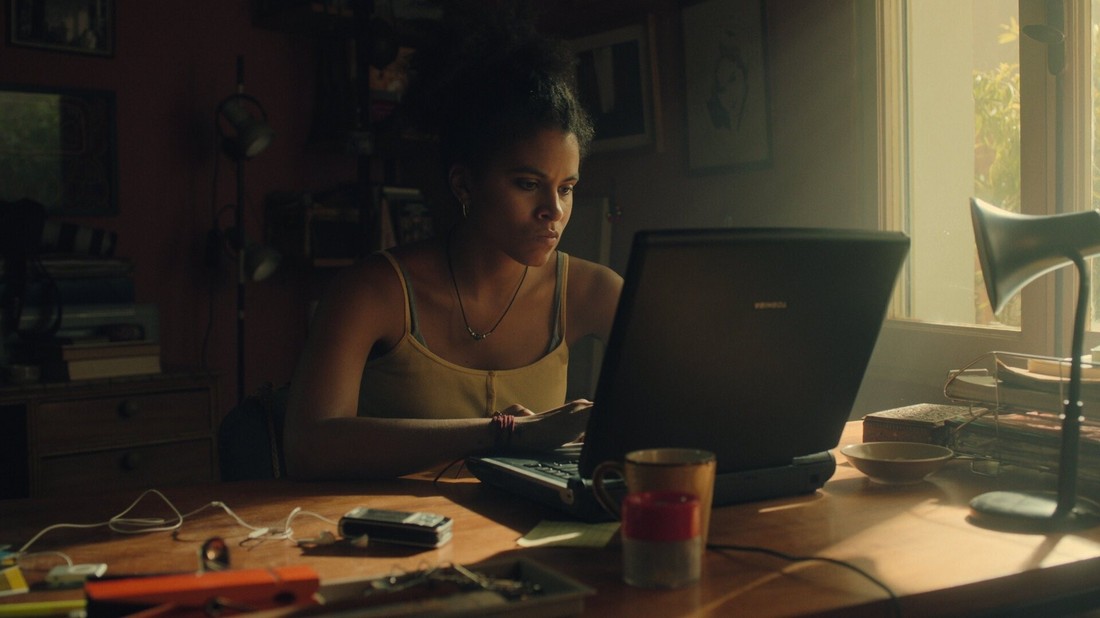
Set in 2006, "Mazey Day" introduces us to Bo, played by Zazie Beetz, a paparazzo with a conscience who is struggling to make ends meet while grappling with the ethical implications of her profession. The episode opens with a stark reminder of the era's media landscape, signified by the birth announcement of Suri Cruise and the backdrop of the Iraq War. Bo's world is one of iPod Shuffles and the early days of digital photography, where a single compromising photo can make or break a celebrity's career.
The story quickly shifts to Mazey Day, portrayed by Clara Rugaard, a young actress on the brink of a breakdown. After a night of substance-fueled confusion, Mazey finds herself in the middle of a hit-and-run, setting off a chain of events that lead her into hiding. Her disappearance sparks a frenzy among the paparazzi, with Bo at the center of the hunt, lured by the promise of a substantial payday.
As Bo delves deeper into Mazey's disappearance, she uncovers a trail that leads to a secluded rehab facility. What unfolds next is a chilling revelation of the dark side of celebrity rehab and the lengths to which the paparazzi will go to capture that perfect shot. The episode takes a sharp turn with the introduction of a werewolf twist, transforming Mazey into a creature of the night and the paparazzi into her prey.
The werewolf element, while seemingly out of place in the Black Mirror universe, serves as a metaphor for the beastly nature of fame and the media's role in shaping public perception. Mazey's transformation is both a physical and psychological manifestation of her struggle with addiction and the public's insatiable appetite for her downfall.
The episode's climax is a chaotic blend of horror and tragedy, with Mazey's werewolf identity leading to a bloodbath at a local diner. In the midst of this chaos, Bo faces a moral dilemma, ultimately choosing to capture the moment of Mazey's demise rather than intervene. This decision underscores the episode's commentary on the exploitation inherent in the relationship between celebrities and the media.
"Mazey Day" concludes with a sobering reflection on the consequences of our actions and the price of fame. The episode may be short on runtime, but it is long on impact, leaving viewers with a lingering sense of unease and a question about the true cost of celebrity.
In summary, "Mazey Day" is a tightly wound narrative that uses the supernatural to explore the all-too-real issues of media exploitation and the celebrity condition. It is a stark reminder of the series' ability to use speculative fiction to hold a mirror up to society's darkest corners.