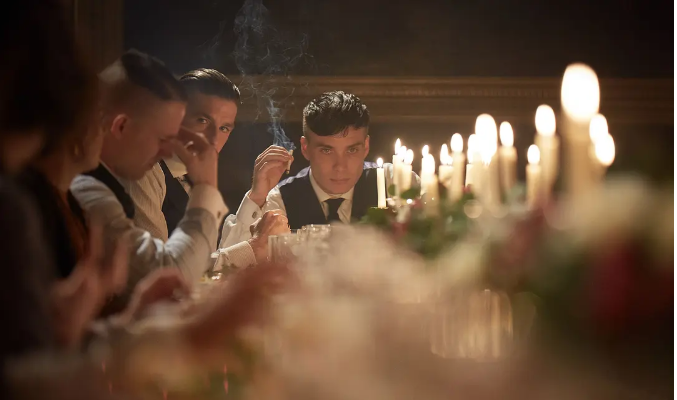
Episode 1: Shadows Beneath the MP’s Crown
In 1924 Birmingham, industrial smog mingled with political unrest. Tommy Shelby stepped onto the steps of the UK House of Commons amid the cheers of the working class—having been elected Member of Parliament for Birmingham Small Heath, he achieved the critical leap from "Peaky Blinders leader" to "legitimate politician." This milestone in "whitewashing" his reputation began with a fiery debut speech denouncing upper-class corruption: on the podium, he lashed out at the aristocracy’s disregard for workers’ interests, drawing thunderous applause from the audience while stinging the eyes of establishment politicians. But before the glow of power had even warmed him, danger crept in—on the night after his speech, Soviet agent Tatiana Petrovna appeared in his London office, laying out a high-stakes gamble: help the Soviet Union smuggle arms (to aid the Red Army in suppressing the White Guard), in exchange for access to Soviet state-backed trade channels that would open up European markets for the Shelby family’s horse racing and whiskey businesses.
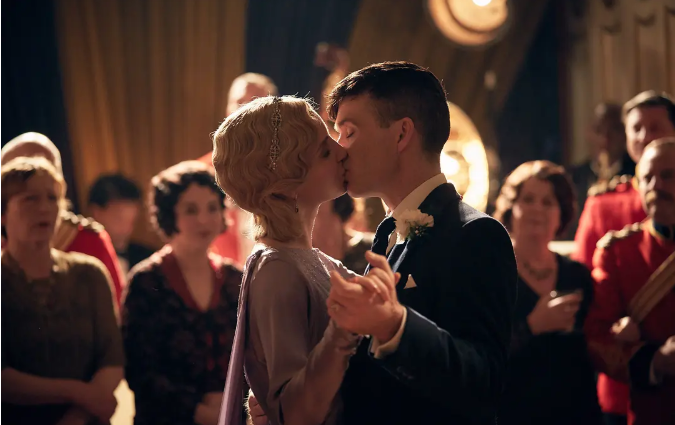
At the family celebration in Birmingham, joy was always tinged with tension. Arthur Shelby’s marriage emerged as a new focal point of conflict: his wife Linda (a former preacher’s daughter) was obsessed with "breaking free from violence"—even when a waiter spilled beer, Arthur’s instinctive rage was crushed by her cold glare into a tearful apology. The trauma of World War I grew sharper under the demand for a "stable life." Meanwhile, Polly Gray confronted Michael Gray: this young man, who had only recently reconnected with his biological family, had secretly been in contact with London gangsters, plotting "independent investments." Polly’s rebuke cut to the chase: "Without Tommy’s protection, you’re just putting your neck on the line for someone to cut."
The undercurrents of the episode reached a climax at Grace’s grave. Tommy brushed his fingers over the tombstone, whispering his true thoughts: "I’m not just fighting for power for the family—I’m trying to escape the fate that ‘Shelby = violence.’" As he turned to leave, a dark figure lurked behind a tree—a White Guard spy, a sign that this Soviet arms deal would drag him into a vortex far more dangerous than the British government.
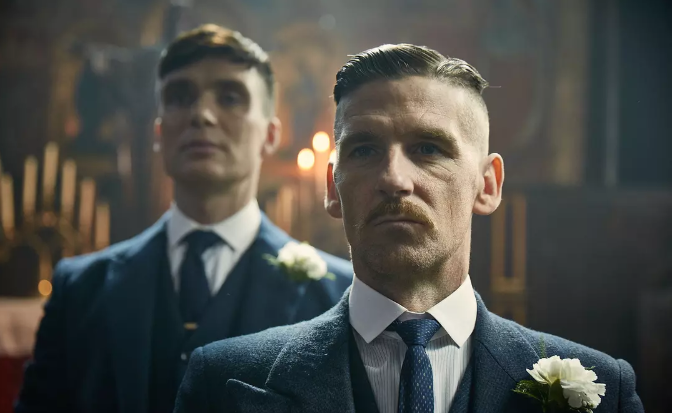
Episode 2: The Smuggling Game and the First Betrayal
Tommy moved quickly to map out the Soviet arms smuggling operation: Arthur and Michael were put in charge of loading the cargo at the Liverpool docks, with the weapons to be disguised as "farm machinery" for export. To bypass checkpoints, he bribed a customs officer with a cut of the Soviet trade profits. But this move was shaky from the start—Linda bluntly called it "selling your soul for money," and Arthur, caught between loyalty to Tommy and his wife’s moral condemnation, could only reluctantly set a bottom line of "no killing unless necessary."
The real collapse came from Michael’s ambition. Eager to prove he "deserved the Shelby name," he secretly arranged for "expedited loading" with a Liverpool dockworker, failing to realize the man was an informant planted by the White Guard. On the night of the loading, gunfire shattered the darkness at the docks: White Guard gunmen launched a surprise attack, leaving two Shelby men dead in a pool of blood and making off with a crate of rifles. When Tommy arrived, the scene of chaos pushed him to an uncharacteristic outburst—he grabbed Michael by the collar and snapped: "You wanted to play the gangster game? Now taste what the cost is."
Misfortune never comes alone—Tatiana suddenly upped the stakes: the Soviets wanted him to also assassinate a White Guard leader in hiding in London. "This is your war, not mine—I won’t get involved," Tommy refused, only to have his weakness exploited by her threat: "If you back out, I’ll leak the arms deal to the British press." At the same time, he confronted the bribed customs officer, who trembled as he admitted: "I’ve already reported to Scotland Yard." Tommy didn’t pull the trigger—instead, he left a cold warning: "Next time, what I send to your family won’t be money—it’ll be bullets."
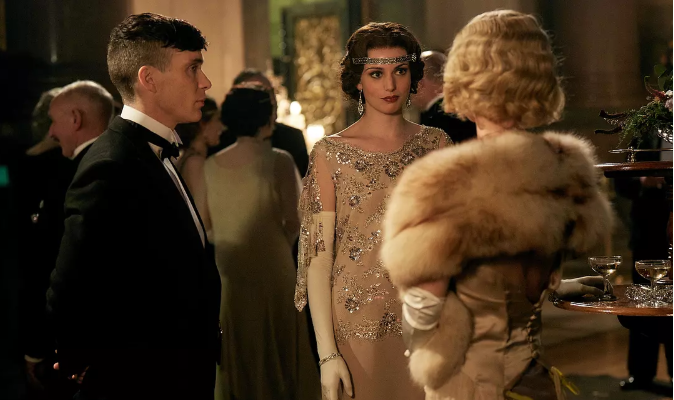
Episode 3: Mosley’s Fangs and Arthur’s Collapse
The emergence of far-right politician Oswald Mosley complicated Tommy’s political game. Over a private dinner, Mosley used "working-class representation" as bait, only revealing his true intentions after a few rounds of drinks: he wanted Tommy to use the Shelbys’ influence to suppress communist protests in Birmingham, in exchange for Mosley’s support in Parliament. Tommy smelled danger—the "new order" Mosley spoke of was essentially a dictatorial flame fanning hatred. He played along on the surface while secretly hitting the record button, coolly retorting: "Men like you don’t build empires—you just burn everything down."
On the other side of Birmingham, Arthur’s world crumbled completely. In retaliation for the dock ambush, the White Guard attacked Linda as she left church; the black eye she suffered became the final straw that broke Arthur. Guilt and rage drove him to the pub where the attackers were hiding, and he beat one of them to death with a chair. Linda’s ultimatum cut into him like a knife: "I married a man who wanted to change—not a killer." Unable to bear it, Arthur returned to opium, a habit he had kicked years earlier—In the smoke, the screams of the WWI trenches tangled with the pain of reality, and he could no longer hold on.
Polly, meanwhile, took a risky step in secret. She met with Anton Kaledin, a Soviet intelligence officer and Tatiana’s superior, proposing: "I’ll kill the White Guard leader—you keep Michael safe in return." Kaledin agreed, but Polly didn’t tell Tommy—she knew all too well that Tommy would never let her gamble with her own life for Michael’s safety. The episode ended with Tommy replaying the recording of his conversation with Mosley, the light in his office casting shadows on his tense face: on one side was the barrel of the Soviets’ gun, on the other the trap of the far right, and behind him, the family was slowly splitting at the seams.
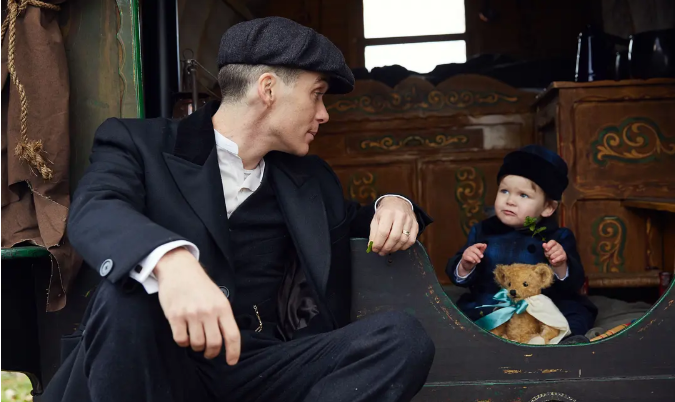
Core Conflicts and Historical Metaphors
The Paradox of Political Transformation
Tommy’s role as an MP epitomizes the 1920s wave of "working-class political participation" in Britain—in reality, when the Labour Party rose to prominence, it did rely on grassroots forces (including gangsters) for votes, yet also needed to break free from its "original sin of violence." His wavering between parliamentary speeches and gang deals exposes the "corrupt core beneath the glossy surface of democracy."
A Microcosm of Soviet-British Covert Warfare
The Soviet arms deal and White Guard subplot are not fictional: in 1924, the Soviet Union was infiltrating Britain through the Comintern, while Britain’s MI5 kept a close eye on Soviet agents. The "proxy war" between the two sides spread across the black market and political circles. Trapped in the middle, Tommy became a disposable pawn in the game of great power politics—this was the true fate of ordinary people caught in global power struggles at the time.
The "Aftermath" of War Trauma
Arthur’s return to opium and his outburst over his wife’s attack echoes Britain’s post-WWI "shell shock" crisis—in the 1920s, over 80,000 British veterans fell into addiction or violence due to PTSD, with no social support available. Arthur’s collapse is a brutal depiction of the truth that "war ends, but trauma lingers forever."